The Accessories That Matter (It's a Short List)
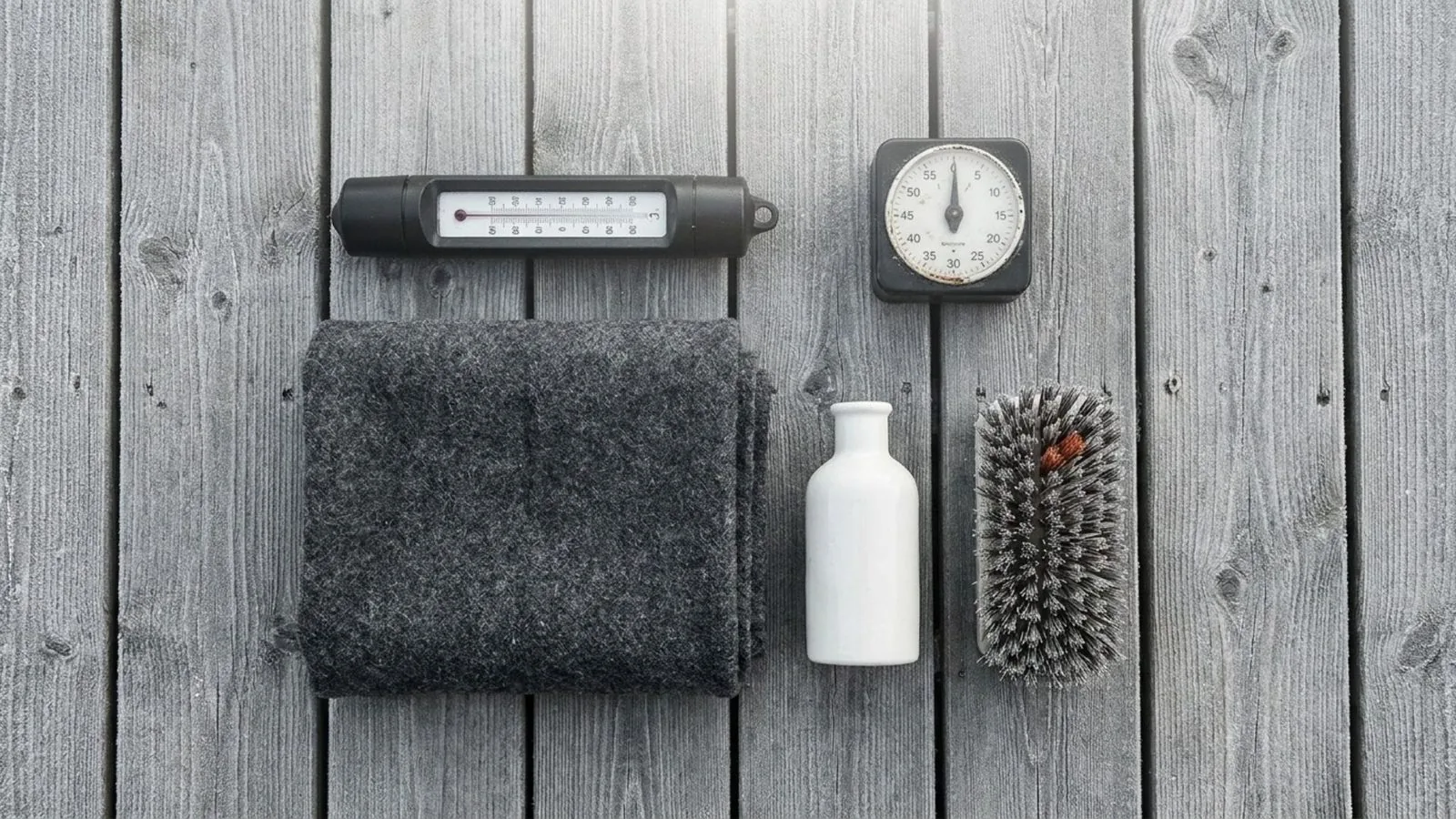
The cold plunge accessory market is mostly merch with a wellness sticker. The actual list of things that improve the practice is four items long and costs less than a month of ice. Here it is, with the honorable mentions and the skip list.
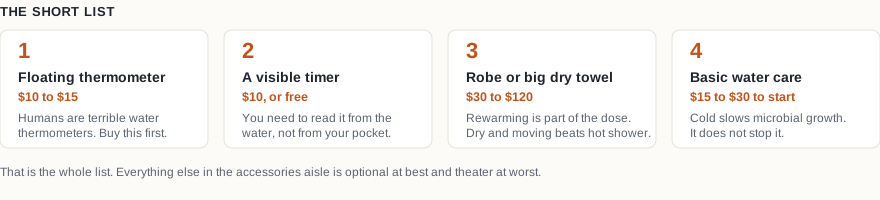
1. A Floating Thermometer (~$10 to $15)
The single highest-value purchase in cold plunging. The entire protocol is built on temperature, humans are terrible at guessing it, and "tap cold" varies by 30°F across the country and the calendar. Any floating pool thermometer rated below 40°F works; analog is fine, digital solar models with ±1°F accuracy run a few dollars more. Buy whichever has a tether, because they all try to escape.
See the temperature chart it pairs with2. A Timer You Can See From the Water (~$10, or free)
Counting seconds in 50°F water produces creative mathematics. A cheap waterproof gym timer or a phone on a stand, out of splash range and out of reach, keeps the session honest in both directions: long enough to count, short enough to respect the caps on the chart. The out-of-reach part is deliberate. The phone stays dry and you stop checking messages between breaths.
3. A Changing Robe or Big Dry Towel (~$30 to $120)
The unglamorous truth about quitting: most lapsed plungers didn't quit the cold, they quit the wet shuffle across a freezing patio afterward. A hooded changing robe (the surfer kind) or even an oversized towel parked at the tub's edge fixes the worst minute of the practice and helps manage the afterdrop period properly: dry fast, layer up, move around. The $100+ branded versions are nice. A $35 generic does the same job.
4. Basic Water Care ($15 to $30 to start)
Cold slows microbes; it doesn't cancel them. Without care, an unfiltered tub turns in one to two weeks. The minimal kit: a fine mesh skimmer net, spa test strips, and either small doses of spa-grade hydrogen peroxide or a mild chlorine-free sanitizer suited to cold water. Change the water on a schedule, wipe the tub down, done. If you're treating water, never mix treatment chemistries (the Epsom salt plus chlorine combination, for instance, is a known burn hazard), and when in doubt, drain and refill. Water is cheap; shortcuts aren't. And if you already have white stringy flakes or a slick waterline film, stop buying chemicals: that's a biofilm growing inside your plumbing, and the fix is a purge. Full protocol on the white water mold page.
Honorable Mentions
- Reusable ice: jugs and molds. Frozen gallon jugs or purpose-made ice blocks cycle through your freezer and cut bagged ice spending to near zero for an every-other-day habit. The Cold Pod sells a ~$41 ice mold that makes 3kg blocks; milk jugs cost nothing and work nearly as well. Check the Cold Pod ice mold price if you want the tidy version.
- Neoprene booties. Not for the tub, for the conditioned plunger going below 45°F whose feet tap out before the rest. Beginners shouldn't be at those temperatures anyway.
- A beach ball under the cover (a real Cold Pod community trick): keeps rainwater from pooling and the lid from sagging. Cost: a beach ball.
- Step stool with grip tape for barrel-style tubs. Wet plastic plus bare feet is the actual most common plunge injury, per every owner forum.
The Skip List
- "Cold plunge supplements." No. The water is the supplement.
- Bluetooth temperature sensors at $80+ doing the job of the $12 float, unless a chiller you already own includes one.
- Branded aromatherapy for cold water. You will not be smelling anything at 50°F. We promise.
- Dry brushes, ice towels, recovery mists and the rest of the checkout-page upsell aisle. Nothing wrong with them. Nothing cold-plunge about them either.
Total for the full kit: about $70 to $200 depending on the robe. Pair it with any tub from the budget page and you have everything this practice requires. The expensive part was never the equipment. It's getting in tomorrow, too. The first 30 days plan handles that part.